Dr Vassilia Orfanou, PhD, Post Doc, LUDCI.eu
Writes for the Headline Diplomat eMagazine, LUDCI.eu
Summary
Diplomacy is often presented as a process of dialogue and compromise, but in practice it functions more like a strategic marketplace shaped by relative power and incentives. States do not negotiate out of goodwill; they engage when the expected costs of continued conflict exceed the anticipated gains, and when cooperation offers a comparatively higher return. The ongoing tensions between Iran, Israel, and the United States illustrate this logic clearly: military posturing and sanctions act as instruments that raise the price of defection CSIS (2025) and IISS (2026), while diplomatic incentives attempt to increase the payoff of compliance Brookings (2025) and CFR (2026).
The core policy problem, then, is not the feasibility of diplomacy but the calibration of its underlying incentive structure. Excessive coercion can generate diminishing returns by provoking escalation or hardening resistance RAND (2024) and Atlantic Council (2026), while overly generous concessions risk undermining credibility and encouraging opportunistic behavior Arms Control Association (2025) and Chatham House (2025).
Historical experience suggests that effective diplomacy resembles a form of constrained optimization, where policymakers must balance pressure and inducements to shift the opposing side’s cost–benefit calculation. The objective is not consensus for its own sake, but the construction of an equilibrium in which cooperation emerges as the most rational and stable outcome Wilson Center (2023) and USIP (2024).
Diplomacy in an Age of Power Politics
Modern diplomacy often presents itself as a rational process of negotiation and compromise. Yet behind every diplomatic process lies a harder reality: power politics. States rarely negotiate purely out of goodwill; they negotiate when incentives and pressures align in ways that make compromise preferable to confrontation.
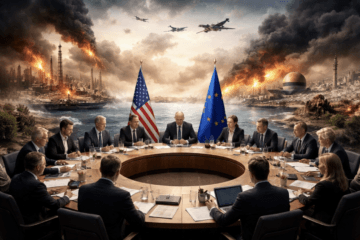
The escalating conflict involving Iran, Israel, and the United States illustrates this dynamic clearly. Military strikes, sanctions, and economic disruption represent the Stick – coercive tools intended to force behavioural change. Diplomatic engagement, sanctions relief, and economic integration represent the Carrot – incentives designed to make cooperation more attractive than resistance.
The challenge facing policymakers today is not simply whether diplomacy can succeed. It is whether the right balance of pressure and incentives can be constructed to prevent the conflict from escalating into a broader regional war.
History suggests that successful diplomacy rarely relies on one approach alone. Instead, it requires a careful calibration of both.
The Logic of Power Politics
Hard Power Still Shapes Negotiation Outcomes
Despite decades of globalization and economic integration, international politics remains fundamentally shaped by power. Military capabilities, economic leverage, and strategic alliances influence how states behave in negotiations.
The United States remains the dominant military actor in the Middle East, while Israel possesses advanced military capabilities and intelligence networks. Iran, by contrast, has developed asymmetric tools designed to offset these advantages: missile forces, proxy networks, cyber operations, and influence over critical maritime chokepoints, such as the Strait of Hormuz.
These asymmetries create a complex balance of power. No actor can achieve its objectives easily through military means alone. Yet each actor retains enough leverage to impose significant costs on its adversaries. This is precisely the environment in which coercive diplomacy tends to emerge.
The Stick: Instruments of Pressure
Military Deterrence
The most visible form of pressure in the current crisis is military force. Targeted strikes on military infrastructure, missile sites, and nuclear facilities are designed to degrade Iran’s capabilities while signalling resolve.
Military pressure serves several diplomatic purposes:
- Demonstrating the costs of escalation
- Limiting the adversary’s strategic options
- Strengthening negotiating leverage
However, coercive force also carries risks. Excessive military pressure can reinforce hardline factions within a targeted state, reducing the likelihood of diplomatic compromise.
For this reason, successful coercive diplomacy often involves limited force calibrated to shape behaviour rather than provoke total war.
Economic Sanctions
Economic sanctions represent another critical instrument of pressure. Over the past decade, sanctions have targeted Iran’s banking sector, energy exports, and international trade relationships.
These measures aim to weaken the country’s economic capacity and create domestic incentives for policy change. When sanctions reduce government revenues, increase inflation, and restrict access to international markets, leaders may face greater internal pressure to negotiate.
Yet sanctions also have limits. Prolonged economic isolation can encourage targeted states to develop alternative economic networks, deepen partnerships with rival powers, or strengthen domestic narratives of resistance. Sanctions therefore function most effectively when combined with credible diplomatic pathways for relief. Treasury and OFAC actions in 2026 continue to illustrate how sanctions are used to disrupt Iran’s energy export and financing channels.
Strategic Isolation
Diplomatic isolation is another tool used to shape behaviour. Limiting participation in international institutions, restricting diplomatic engagement, and discouraging foreign investment can increase the costs of defiance.
However, isolation must be applied carefully. Excessive isolation can reduce communication channels and increase the risk of miscalculation.
Even adversarial relationships often require limited diplomatic engagement to prevent crises from spiralling out of control.
The Carrot: Incentives for Cooperation
While pressure creates motivation to negotiate, incentives make compromise politically feasible.
Economic Reintegration
The most powerful diplomatic incentive available to Western policymakers is the prospect of economic reintegration.
Sanctions relief, access to international financial systems, and increased trade opportunities can provide substantial economic benefits. These incentives can strengthen domestic constituencies within Iran that favour stability and international engagement.
Economic incentives are particularly effective when structured in phased agreements, where benefits increase as compliance with diplomatic commitments is verified.
Security Guarantees
Security concerns lie at the heart of the conflict. Iran fears military intervention and regime destabilization. Israel fears the emergence of a nuclear-armed adversary.
Diplomatic frameworks that address these fears through confidence-building measures, such as transparency mechanisms, arms limitations, or regional security arrangements can reduce incentives for escalation.
Although comprehensive security guarantees may be politically unrealistic, incremental measures can gradually reduce tensions.
Regional Integration
Another potential incentive involves greater integration into regional economic and diplomatic structures. Participation in regional trade networks, infrastructure initiatives, and security dialogues can offer long-term benefits that outweigh the short-term advantages of confrontation.
These incentives help shift the strategic calculus from rivalry to interdependence.
The Difficulty of Balancing Carrots and Sticks
The challenge for policymakers lies not simply in identifying carrots and sticks, but in calibrating them effectively. Too much pressure risks escalating conflict and strengthening hardliners, while too many incentives risk signalling weakness and undermining deterrence. This tension becomes particularly acute in the context of the United States, Iran, and Israel, where each move can shift the broader risk of escalation. Therefore, the task is to ensure that pressure and incentives reinforce rather than cancel each other out.
In practice, successful diplomacy tends to follow a clear sequence, in which each step builds on the previous one:
- Establish credible pressure to demonstrate the costs of non-cooperation.
- Offer realistic incentives that make cooperation attractive.
- Maintain flexibility to adjust the balance as negotiations evolve.
From Pressure to Leverage
The first step is to establish credible pressure. This requires convincing Iran that continued escalation will carry real and unavoidable costs. In practical terms, this includes tightening economic sanctions, reinforcing military presence in the region, and coordinating closely with allies to project unity and resolve. Iran is likely to test these signals through calibrated actions, such as proxy activity or incremental nuclear advances, seeking to probe limits without triggering full confrontation. At the same time, Israel may respond more forcefully if it perceives the threat as immediate. Against this backdrop, the United States must aim to restore deterrence without provoking escalation. Pressure must therefore be strong enough to be taken seriously yet measured enough to avoid cornering Iran into a response that could spiral into open conflict.
Creating a Credible Off-Ramp
Once pressure is established, it must be paired with realistic incentives. Diplomacy cannot succeed without a pathway for de-escalation that Iran can credibly pursue. This means offering tangible benefits, such as phased sanctions relief or limited economic reintegration, tied directly to verifiable steps on its nuclear program. These incentives must be carefully designed. They need to be politically usable for Iran’s leadership, while remaining conditional and reversible for the United States. Timing is critical. If incentives are introduced too early or appear too generous, they risk being interpreted as weakness, both in Tehran and among regional partners, such as Israel. Yet without them, pressure alone is unlikely to produce sustained restraint. Effective sequencing ensures that benefits follow compliance, reinforcing rather than undermining deterrence.
Adapting to a Moving Target
Even a well-calibrated approach cannot remain static. The third step is to maintain flexibility as conditions evolve. The United States must continuously reassess Iranian behaviour and adjust the balance between pressure and incentives accordingly. De-escalation should be met with limited and reversible incentives that reinforce cooperation, while escalation should trigger a controlled and preferably multilateral increase in pressure. This adaptability depends on close coordination with allies to ensure consistent messaging and to prevent gaps that Iran could exploit. In a fluid strategic environment, rigidity weakens leverage, while flexibility sustains it.
The Risks of Mismanagement
Mismanaging this balance can quickly derail diplomatic efforts. Excessive pressure may corner Iran and increase the likelihood of retaliation or miscalculation. Premature concessions risk eroding deterrence by rewarding non-compliance. Inconsistent signalling between the United States and its partners can weaken credibility and invite further testing. At the same time, a lack of clarity about the desired end state leaves Iran with little incentive to change course.
Avoiding these outcomes requires disciplined diplomacy grounded in clear red lines, equally clear off-ramps, and careful sequencing of pressure and incentives. Just as importantly, it requires sustained unity among allies. When these elements are aligned, the United States is better positioned to reduce the risk of escalation while preserving a viable path toward stability.
Lessons from Historical Precedents
Previous diplomatic breakthroughs illustrate that progress rarely emerges from goodwill alone. Instead, they show how pressure and incentives, when carefully aligned, can shift even deeply adversarial relationships.
The Cold War example
During the Cold War, agreements such as the Strategic Arms Limitation Talks and the Intermediate-Range Nuclear Forces Treaty were not the product of trust between the United States and the Soviet Union. Rather, they emerged from sustained military competition combined with the growing realization on both sides that escalation carried unacceptable risks. The pressure came from the arms race itself and the doctrine of mutually assured destruction, while the incentive was clear: reducing arsenals lowered the probability of catastrophic conflict. Cooperation became rational not because relations improved, but because the cost of non-cooperation became too high.
The Iran case
A similar dynamic can be observed in nuclear diplomacy with Iran. The Joint Comprehensive Plan of Action followed years of escalating economic sanctions that significantly constrained Iran’s economy. These measures created the pressure necessary to bring Iran to the negotiating table. At the same time, the agreement offered concrete incentives in the form of sanctions relief and reintegration into global markets, conditional on verifiable limits to its nuclear program. The deal demonstrated how sequencing matters: pressure created leverage, but incentives made agreement possible.
The North Korean case
Another instructive case is North Korea. Periods of diplomatic engagement, such as the Agreed Framework, combined security assurances and economic aid with constraints on nuclear development. While the long-term outcome remains contested, the episode still illustrates a key point: without incentives, pressure alone failed to halt nuclear progress, but without sustained pressure, incentives lost their effectiveness. Breakdowns often occurred when one side perceived the balance as unfair or unreliable.
The Egypt & Israel Camp David Accords
Even outside the nuclear domain, this pattern holds. The Camp David Accords between Egypt and Israel were made possible by a combination of U.S. diplomatic pressure and substantial economic and military incentives offered to both parties. Here, incentives were not symbolic but structural, reshaping the long-term strategic calculations of both sides and making peace more sustainable.
Consistent Lessons learned
Taken together, these cases point to a consistent lesson learned: diplomacy does not require trust at the outset, particularly in adversarial relationships, such as those between the United States and Iran or historically between the United States and the Soviet Union. What it requires instead is structure, namely a strategic environment in which the costs of defection are high, and the benefits of cooperation are credible, tangible, and clearly linked to specific actions. When this balance is in place, each side calculates that cooperation is less costly than non-cooperation, allowing even deeply mistrustful adversaries to find rational grounds for agreement.
Making the costs of defection “high” means ensuring that refusing to cooperate leads to outcomes a state wants to avoid, such as sustained economic strain, increased isolation, or heightened security risks. For example, in the case of Iran, sanctions were not just punitive measures but a way of steadily increasing the economic and political price of continuing its nuclear trajectory. Similarly, during the Cold War, the risk of nuclear escalation created a constant backdrop of pressure that neither side could ignore.
At the same time, the benefits of cooperation must be credible and tangible. Credible means that the other side believes the offer will be delivered if it complies. Tangible means the benefits are material and meaningful, such as sanctions relief, security guarantees, or economic access, rather than symbolic gestures. Crucially, these benefits must be clearly linked to specific, verifiable actions. This is what makes agreements enforceable in practice. In the Joint Comprehensive Plan of Action, for instance, sanctions relief was tied directly to measurable limits on uranium enrichment and subject to inspection. This linkage reduces ambiguity and limits the risk that one side will feel cheated.
When both sides face a situation in which non-cooperation is increasingly costly and cooperation produces reliable, step-by-step gains, trust becomes less necessary. Compliance is driven not by goodwill, but by self-interest. Even deeply mistrustful adversaries can reach and sustain agreements because the structure of incentives makes doing so the least risky option available.
Strategic Recommendations for Policymakers
To manage the current crisis effectively, policymakers should pursue a coordinated strategy that integrates both coercive and cooperative elements.
- First, maintain credible deterrence to discourage escalation and protect regional stability.
- Second, clearly articulate diplomatic pathways that provide tangible benefits for compliance with negotiated agreements.
- Third, strengthen international coordination to ensure that pressure and incentives are applied consistently across major powers.
- Fourth, support incremental agreements rather than seeking immediate comprehensive solutions. Small diplomatic successes can build momentum for broader negotiations.
- Finally, preserve communication channels even during periods of intense confrontation. Dialogue does not signify weakness; it is a necessary tool for crisis management.
Each step of the above-mentioned steps plays a distinct role, but their effectiveness depends on how well they reinforce one another in sequence.
Maintaining credible deterrence to discourage escalation and protect regional stability
Deterrence establishes the baseline for all diplomacy. It signals to actors, such as Iran that escalation will carry clear costs, whether through economic pressure, military posture, or coordinated responses with allies. The key is credibility. Signals must be consistent and backed by the capability and willingness to act if necessary. Without credible deterrence, diplomatic efforts lack leverage, as there is little incentive for the other side to alter its behaviour. At the same time, deterrence must remain proportionate to avoid provoking the very escalation it is meant to prevent.
Articulating diplomatic pathways that provide tangible benefits for compliance with negotiated agreements
Deterrence alone cannot produce lasting outcomes. Policymakers must define a clear and realistic pathway for de-escalation, outlining what compliance looks like and what benefits it brings. These benefits, such as sanctions relief or economic access, must be tangible and explicitly tied to verifiable actions. This clarity reduces uncertainty and helps the opposing side justify cooperation domestically. Without a credible diplomatic pathway, pressure risks becoming an end rather than a means to achieve behavioural change.
Strengthening international coordination to ensure consistency
A fragmented approach undermines both pressure and incentives. Coordination among major actors, including the United States and its European and regional partners, ensures that signals are aligned and mutually reinforcing. When pressure is applied unevenly or incentives are offered inconsistently, it creates opportunities for actors like Iran to exploit divisions. Unified messaging and synchronized policies increase the overall effectiveness of the strategy and enhance credibility.
Supporting incremental agreements rather than seeking immediate comprehensive solutions
In highly polarized environments, sweeping agreements are often unrealistic at the outset. Incremental steps, such as limited constraints or partial relief measures, allow both sides to test compliance and build confidence over time. These smaller agreements reduce risk, create measurable progress, and generate momentum for broader negotiations. Attempting to secure a comprehensive deal too quickly can lead to deadlock or collapse if expectations are not met.
Preserving communication channels even during periods of confrontation
Sustained dialogue is essential for managing crises and preventing miscalculation. Communication channels allow for clarification of intentions, de-escalation of incidents, and exploration of potential compromises. Maintaining dialogue between actors, such as the United States and Iran does not signal weakness; it reflects strategic discipline. In its absence, misunderstandings can escalate rapidly, increasing the likelihood of unintended conflict.
Taken together, these steps form a coherent process. Deterrence creates leverage, diplomacy provides direction, coordination ensures consistency, incrementalism builds momentum, and communication sustains stability. When applied in combination, they offer a structured way to manage escalation while preserving the possibility of a negotiated outcome.
Where Strategic Balance Breaks Down: What Each Actor Is Getting Wrong
The idea of calibrated carrots and sticks assumes rational sequencing, coherent signalling, and a shared understanding of escalation limits. In the Iran, Israel, and United States triangle, those conditions are repeatedly undermined. Each actor applies elements of coercive diplomacy but fails to integrate them into a stable system. The result is not equilibrium but drift toward recurring crises.
Israel: Tactical Superiority Without Strategic Completion
Israel’s strength lies in precision, intelligence, and rapid military action. Yet this produces a structural weakness. Tactical success is often treated as strategic resolution when in fact it is only disruption, as seen in post-strike analyses of Iranian proxy responses.
The first problem is that military strikes degrade capabilities but do not resolve the underlying political drivers of confrontation. Iran’s strategic intent is not eliminated by removing infrastructure.
The second problem is that deterrence is treated as a fixed outcome rather than a continuous relationship. Repeated escalation without a structured diplomatic layer risks blurring thresholds rather than clarifying them, per deterrence theory critiques.
The third problem is the absence of a durable diplomatic architecture. Coercion is consistently applied, but credible pathways for de-escalation are underdeveloped or politically sidelined.
The paradox is clear. Israel maximises short-term security effects but may be contributing to long-term instability by compressing Iranian decision-making into more asymmetric and less transparent forms of response.
Iran: Resistance Without a Stable Endgame
Iran’s strategy is built on endurance, ambiguity, and asymmetric leverage. It has been effective at surviving pressure but far less effective at transforming confrontation into stability.
The first weakness is a tendency to treat sanctions and isolation as temporary conditions, rather than structural constraints. This encourages cyclical behaviour, where escalation and partial negotiation replace sustained settlement, as detailed in sanctions efficacy reports.
The second weakness is reliance on asymmetric tools, such as proxy networks and threshold nuclear ambiguity. These create leverage but also deepen mistrust, making credible long-term agreements harder to sustain.
The third weakness is strategic misreading of coalition dynamics. Instead of fragmenting opposition, Iranian escalation often produces temporary alignment between the United States, Israel, and European partners.
Iran has mastered resistance but not resolution. It increases the cost of coercion but does not successfully reduce the cost of cooperation.
United States: Inconsistency at the Centre of the System
The United States occupies the central balancing role but struggles with coherence over time. It alternates between pressure and engagement without fully locking either into a stable sequence.
The first issue is conceptual. Pressure and incentives are often deployed simultaneously rather than sequentially, which weakens the signalling value of both, echoing coercive diplomacy sequencing models.
The second issue is political volatility. Changes in domestic priorities and allied pressures produce oscillation in strategy, which encourages adversaries to wait out policy shifts rather than respond to them.
The third issue is coordination. Messaging between the United States and its partners is often reactive rather than structured, which creates gaps that other actors can exploit.
The result is not a lack of power but a lack of predictability. In coercive diplomacy, unpredictability reduces leverage because it weakens credibility on both punishment and reward.
Restoring Balance: From Fragmented Coercion to Structured Equilibrium
A stable framework does not require more force or more concessions. It requires restructuring the logic of interaction.
- Replace Overlapping Signals with Clear Sequencing
Pressure must precede incentives, not operate alongside them in an undifferentiated way. Without sequencing, no actor can interpret whether behaviour change is being rewarded or merely anticipated.
- Establish Mutual Red Lines and Mutual Off-Ramps
Deterrence is incomplete without credible exits. Each actor must understand not only what triggers escalation but also what triggers de-escalation. Without symmetry, the system locks into perpetual signalling competition.
- Stabilise Communication as a Core Strategic Asset
The greatest risk is not deliberate escalation but miscalculation. Continuous and structured communication channels are therefore not diplomatic formalities but essential risk management tools.
Conclusion: The Art and Fragility of Strategic Balance
The current crisis underscores a central truth of international politics: effective diplomacy rarely functions independently of power. States and actors respond not just to rhetoric but to signals of both risk and reward. Diplomacy operates at the intersection of coercion and cooperation, and success depends on calibrating these elements with precision.
Yet the Iran, Israel, and United States dynamic shows how difficult that calibration is in practice. Excessive reliance on force risks deepening the conflict, hardening adversaries, and provoking unintended escalation, while overemphasis on incentives can weaken credibility and signal a tolerance for noncompliance. The challenge for policymakers is therefore not simply to choose between pressure and engagement, but to maintain a strategic balance in which both reinforce rather than undermine each other.
This balance is not a static midpoint. It is a managed process that depends on sequencing, credibility, and coordination. Pressure must be sufficient to compel negotiation without foreclosing diplomatic space. Incentives must be strong enough to make compromise politically and economically viable, while remaining conditional enough to preserve deterrence. When these elements are misaligned, diplomacy loses its structure and reverts to reactive crisis management.
In this sense, strategic balance is less about equilibrium than about disciplined asymmetry. Coercion creates leverage, but only diplomacy gives it direction. Incentives enable agreement, but only pressure makes them meaningful. Neither is effective in isolation, and neither is stable without the other.
Achieving this equilibrium will not immediately resolve the underlying disputes between Iran, Israel, and the United States. But it can prevent the crisis from spiralling into a broader and more destructive confrontation. More importantly, it provides a structured pathway for incremental progress, where limited agreements can accumulate into more durable forms of stability over time.
Ultimately, the test for policymakers is not whether they can deploy carrots and sticks, but whether they can integrate them into a coherent system that preserves both credibility and flexibility. In a fragmented and competitive international environment, that integration is no longer a theoretical preference. It is the minimum condition for preventing escalation from becoming the default trajectory of international politics.
Final Reflection: Diplomacy in a Fragmented and Competitive World
The implications of the Iran crisis extend far beyond the Middle East. They highlight the re-emergence of power politics in a global system, where economic interdependence alone no longer guarantees stability. In this environment, traditional tools of diplomacy, such as dialogue, negotiation, and compromise remain necessary but are no longer sufficient on their own.
Policymakers must therefore operate within a more complex strategic environment, where incentives and pressures are continuously intertwined. Actions taken in one domain must reinforce rather than undermine outcomes in another. This requires anticipating adversaries’ calculations, coordinating effectively with allies, and sequencing measures in a way that preserves both credibility and leverage over time.
At its core, the Iran, Israel, and United States dynamic illustrates a broader structural challenge in contemporary geopolitics: diplomacy is no longer episodic, but continuous. It is not defined by discrete negotiations, but by sustained management of escalation risk under conditions of mistrust and strategic competition.
The resolution of this crisis, and the precedent it establishes for other geopolitical flashpoints, will depend less on any single diplomatic breakthrough and more on whether policymakers can maintain this disciplined equilibrium over time. Mastery of strategic balance is therefore not a theoretical aspiration, but a practical requirement for preserving both regional stability and the wider international order.
Implementing Strategic Balance: Three Imperatives
To operationalise this approach, policymakers must focus on three mutually reinforcing imperatives that ensure pressure and incentives function as part of a coherent system rather than as competing instruments.
- Align Short-Term Actions with Long-Term Strategic Objectives
Every policy instrument, whether sanctions, military posture, or diplomatic incentives, must be embedded within a coherent long-term strategy. Immediate actions should advance clearly defined and verifiable steps toward broader objectives, such as nuclear non-proliferation and regional stability.
For example, targeted sanctions on nuclear-linked entities are most effective when sequenced alongside conditional and reversible relief tied to specific compliance benchmarks. Without this alignment, policy risks becoming reactive, eroding credibility and undermining the strategic purpose of pressure itself.
- Strengthen Credibility Through Consistency and Predictability
Credibility is the foundation of both deterrence and diplomacy. Adversaries must believe that compliance will be reliably rewarded and violations consistently addressed. When enforcement is uneven or incentives appear politically contingent, rational calculation shifts away from cooperation.
Predictable sanctions enforcement, timely delivery of agreed incentives, and unified messaging among allies create a framework in which behaviour becomes more legible and therefore more governable. Consistency across policy tools reduces miscalculation and strengthens the perception that commitments will be sustained over time. - Sustain Adaptive Communication and Multilateral Coordination
Even during periods of heightened tension, continuous communication channels with Iran and structured coordination with regional and international partners are essential. Open lines of communication allow for rapid clarification of intent, crisis management, and real-time recalibration of both pressure and incentives.
Coordination ensures that policies are applied coherently rather than selectively, preventing adversaries from exploiting gaps between actors. At the same time, adaptive communication enables incremental confidence-building measures, which can stabilise expectations and reduce the risk of unintended escalation.
System Logic: How the Three Imperatives Interact

Figure 1: The Three Imperatives of Strategic Balance
These three pillars are mutually reinforcing rather than sequential or independent. Alignment ensures that actions move in a consistent strategic direction. Credibility ensures those actions are believed. Coordination ensures they are not undermined by fragmentation.
Where compliance is achievable, the system reinforces it through clarity, predictability, and credible incentives. Where defection risks emerge, it increases the cost through coordinated and consistent pressure. Crucially, it preserves structured diplomatic space even under conditions of strain, ensuring that engagement is never fully closed off.
Final Synthesis
Ultimately, the value of this framework lies in shifting stability from a reactive posture to an actively managed condition. Risks are not simply addressed after they emerge but are anticipated and contained through structured signalling and coordinated response.
Signals remain consistent across actors, reducing ambiguity and limiting the scope for miscalculation. Most importantly, even under sustained pressure, the system preserves a viable pathway for engagement, keeping diplomacy operational rather than symbolic.
In this sense, strategic balance is not a fixed outcome but an ongoing discipline. Its success depends not on eliminating rivalry, but on ensuring that rivalry remains bounded, legible, and strategically contained.
Reference list
Arms Control Association (2025) JCPOA Timeline and Lessons. Available at: https://www.armscontrol.org/factsheets/JCPOA-timeline
Arms Control Association (2024) Iran’s Nuclear Threshold Strategy. Available at: https://www.armscontrol.org/act/2024-01/features/irans-nuclear-threshold-strategy
Atlantic Council (2026) Sanctions’ Limits: Iran’s China Pivot. Available at: https://www.atlanticcouncil.org/in-depth-research-reports/report/sanctions-limits-iran
Belfer Center, Harvard Kennedy School (2018) Deterrence Works. Available at: https://www.belfercenter.org/publication/deterrence-works
Brookings Institution (2014) The Concept of Strategic Balance: Relevance and Reality. Available at: https://www.brookings.edu/articles/the-concept-of-strategic-balance-relevance-and-reality-an-asian-perspective/
Brookings Institution (2024) The Iran-Israel-US Triangle in 2024: Escalation Risks and Pathways to De-escalation. Available at: https://www.brookings.edu/articles/the-iran-israel-us-triangle-in-2024-escalation-risks-and-pathways-to-de-escalation/
Brookings Institution (2025) Reviving JCPOA: Phased Incentives. Available at: https://www.brookings.edu/articles/reviving-jcpoa-incentives
Carnegie Endowment (2024) Regional Security Dialogues: Gulf Integration. Available at: https://carnegieendowment.org/2024/05/15/regional-security-gulf-pub-2024
Cato Institute (2022) Iran Sanctions: A Failure. Available at: https://www.cato.org/policy-analysis/iran-sanctions-failure
Chatham House (2025) US Allies Coordination on Iran. Available at: https://www.chathamhouse.org/2025/03/us-allies-iran-coordination
CIRIS (2024) Deterrence Theory. Available at: https://www.ciris.info/learningcenter/deterrence-theory/
Council on Foreign Relations (2023) What to Know About Carrots and Sticks in U.S. Foreign Policy. Available at: https://www.cfr.org/backgrounder/what-know-about-carrots-and-sticks-us-foreign-policy
Council on Foreign Relations (2025) North Korea Agreed Framework: What Worked, What Failed. Available at: https://www.cfr.org/backgrounder/north-korea-agreed-framework
Council on Foreign Relations (2026) Coercive Diplomacy in Iran Crisis. Available at: https://www.cfr.org/report/coercive-diplomacy-iran-2026
CSIS (2024) Israel’s Strikes on Iran: What Happens Next?. Available at: https://www.csis.org/analysis/israels-strikes-iran-what-happens-next
CSIS (2025) Iran’s Military Power: Capabilities and Intentions. Available at: https://www.csis.org/analysis/irans-military-power-2025
European Council (2025) EU Sanctions Against Iran. Available at: https://www.consilium.europa.eu/en/policies/sanctions-against-iran
Foreign Affairs (2026) Carrots and Sticks: Lessons for Middle East. Available at: https://www.foreignaffairs.com/articles/middle-east/2026-02-01/carrots-sticks-iran
Global Journal of International Studies (n.d.) Coercive Diplomacy: A Theoretical and Practical Evaluation. Available at: https://gjis.journals.yorku.ca/index.php/gjis/article/download/38941/36390/49932
IAEA (2026) Verification and Monitoring in Iran. Available at: https://www.iaea.org/publications/reports/iran-2026
IAEA (n.d.) Iran-IAEA Cooperation. Available at: https://www.iaea.org/topics/iran-iaea-cooperation
IISS (2026) The Military Balance 2026. Available at: https://www.iiss.org/publications/the-military-balance
Institute for National Security Studies (INSS) (2023) Iran’s Strategy in the Shadow of War. Available at: https://www.inss.org.il/publication/iran-strategy/
Jacob, S. and Müller, P. (2019) ‘Coercive Diplomacy: Advances and Challenges’, Journal of Strategic Studies. Available at: https://www.tandfonline.com/doi/full/10.1080/01402390.2019.1575222
Modern Diplomacy (2024) Balance of Threat Vs. Balance of Power in Geopolitics. Available at: https://moderndiplomacy.eu/2024/09/15/balance-of-threat-vs-balance-of-power-in-geopolitics/
Oxford Academic (2025) How Coercive Diplomacy Works. Available at: https://academic.oup.com/book/60757/chapter-abstract/528443880
RAND Corporation (2024) Israeli Strikes on Iran: Escalation Risks. Available at: https://www.rand.org/pubs/research_reports/RRA2500-1.html
Sechser, T.S. and Fuhrmann, M. (2017) Nuclear Weapons and Coercive Diplomacy. Princeton University Press.
Stanley Center (n.d.) Coercive Diplomacy: Scope and Limits. Available at: https://www.stanleycenter.org/publications/pab/pab06CoerDip.pdf
US Treasury (2026) Iran Sanctions Program Overview. Available at: https://home.treasury.gov/policy-issues/financial-sanctions/sanctions-programs-and-country-information/iran-sanctions
USIP (2024) Camp David Accords Revisited. Available at: https://www.usip.org/publications/2024/09/camp-david-revisited
Washington Institute for Near East Policy (2024) Iran’s Proxy Networks in the Middle East. Available at: https://www.washingtoninstitute.org/policy-analysis/irans-proxy-networks-middle-east
Wilson Center (2023) Cold War Arms Control: SALT/INF. Available at: https://www.wilsoncenter.org/publication/cold-war-arms-control